
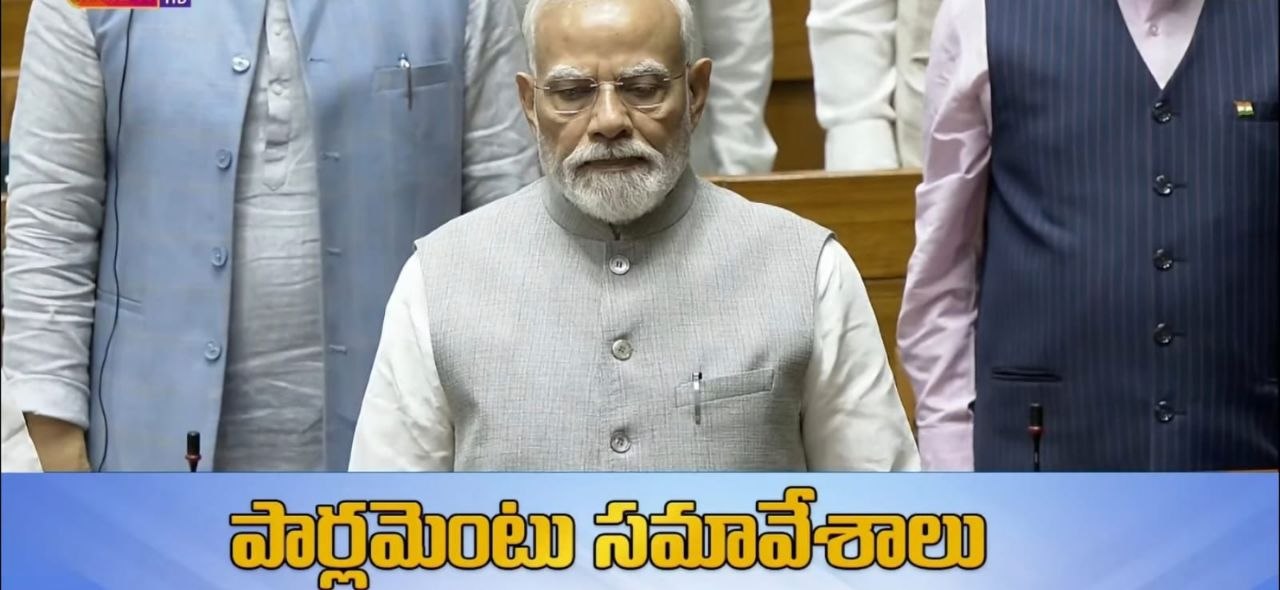
Parliament Session Begins: Must Be a Platform for Discussing Public Issues
Trinet News
13 August 2026
By Peri Nageswara Rao
Parliament is the most vital platform in the country's democratic system. It is a sacred place where elected representatives discuss national issues, public needs, government policies, development programs, and economic matters to make decisions. Against this backdrop, the commencement of the parliament session holds immense significance for the nation's political and administrative system.
A parliament session is not merely a process of passing laws. Asking questions on behalf of the public, holding the government accountable, discussing national issues, and contemplating future policies are also core responsibilities of Parliament. While the ruling party must explain its policies, the opposition must bring public issues to the government's attention.
Currently, the country is facing several critical issues. Price rise, unemployment, agricultural sector problems, employment opportunities for youth, education, medical facilities, allocation of funds to states, and infrastructure development are directly affecting people's lives. There is a need for a meaningful debate on these matters in Parliament.
During parliament sessions, people observe the performance of their representatives. It is not just about how long an MP spoke in the house; what issues were raised, how strongly public issues were voiced, and how constructively laws were debated are what matters most.
In a democracy, the opposition holds as much importance as the ruling party. Opposing every government decision is not the sole duty of the opposition. It is their responsibility to support decisions that benefit the public while constructively pointing out shortcomings. At the same time, the ruling party must patiently listen to and answer the opposition's questions.
The smooth functioning of parliamentary proceedings is in the interest of the public. If crucial discussions are stalled due to chaos, slogans, and protests in the house, the public bears the loss. Since parliament sessions are conducted using public funds, members have the responsibility to utilize every minute for public welfare.
The role of Parliament in lawmaking is also crucial. A single law can affect the lives of crores of people. Therefore, any bill should be examined from all angles rather than in haste, opinions of experts should be sought, and it should be passed after necessary discussion. Parliament must also oversee the implementation of a law after it is passed.
State issues must also be strongly voiced in Parliament. Coordination between the Center and states is essential for the holistic development of the country. MPs must effectively speak for their states on issues like water disputes, fund allocations, railways, national highways, airports, industries, and employment opportunities.
Youth-related issues should also be given priority in this session. Given the high percentage of youth in the country's population, it is imperative to provide them with quality education, skill development, employment, and industrial opportunities. Policies should be framed to foster new industries, technology sectors, and small businesses rather than relying solely on government jobs.
Farmer issues must also remain central to parliamentary debates. Discussions should focus on permanent solutions for agricultural water, seeds, fertilizers, remunerative prices for crops, storage facilities, and marketing systems. The country's economy strengthens only when the farmer is strong.
Similarly, the development of government hospitals in the healthcare sector, medical services in rural areas, availability of medicines, and medical security for the poor must gain priority. Discussion is also needed on educational sector aspects like government schools, higher education, technical education, and student opportunities.
Parliament should not merely be a platform for political battles. It should be a platform that builds the future of the people. Political differences are natural, but national interest must come first, while personal and political interests take second place. People elect their representatives to voice their concerns in the house. Therefore, every MP must understand the problems of their constituency and raise them in Parliament. That is true public service.
The people of the country hope that these sessions will proceed peacefully and with meaningful discussions. The ruling party must act responsibly, and the opposition must act constructively. Comprehensive discussions should take place on every issue without wasting house time.
Finally, one thing must be clearly remembered—Parliament is not for politicians, but for the people. In this system run by public taxes, the primary goal must be the resolution of public issues. Let us hope that the parliament sessions become even more fruitful for national development, public welfare, and the protection of constitutional values.