
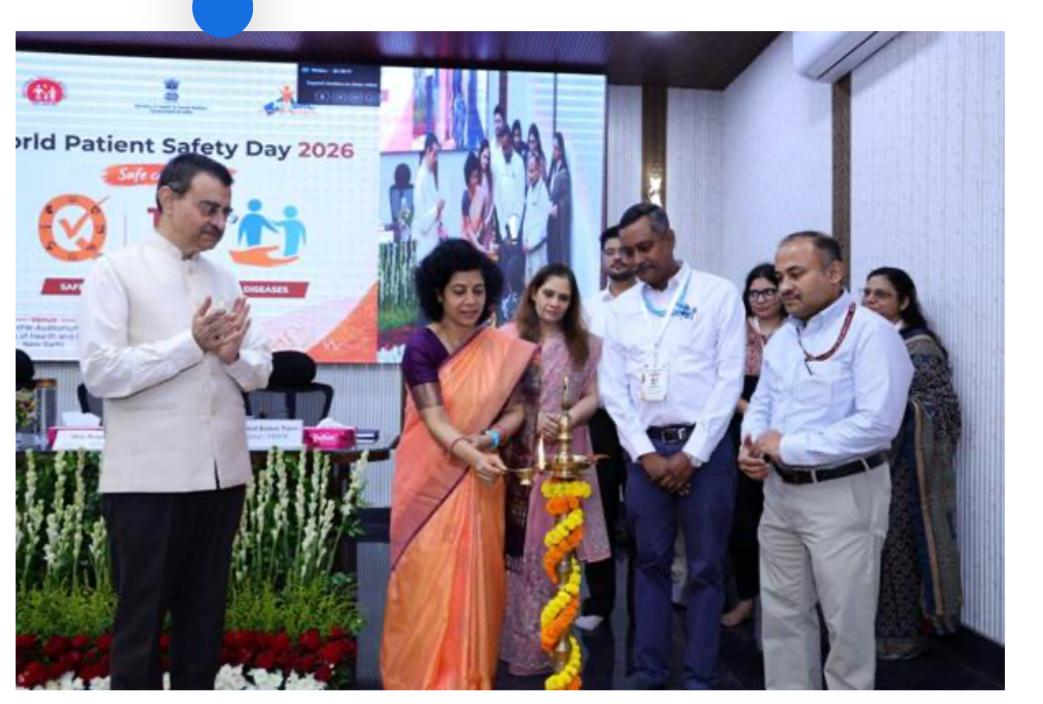
A structured and time-bound approach to quality assurance is crucial for patient safety: Aradhana Patnaik, Additional Secretary and NHM Mission Director. Patient safety must be further strengthened to tackle the rising burden of non-communicable diseases: Aradhana Patnaik. National patient safety pledge taken, reiterating collective commitment to safe and quality medical care. Technical sessions discussed innovative state initiatives in safe NCD care and patient safety.
New Delhi, September 18, 2026: The Ministry of Health and Family Welfare organized World Patient Safety Day 2026 under the core theme “Safe Care for Noncommunicable Diseases (NCDs)” at the NIHFW auditorium in New Delhi. This national event primarily focused on further improving patient safety and medical service quality across all stages, from NCD prevention to long-term treatment. Policy makers, healthcare leaders, public health experts, clinicians, quality management specialists, development partners, and representatives from states and union territories participated in the event.
Addressing the gathering, Aradhana Patnaik, Additional Secretary, Ministry of Health and Family Welfare and Mission Director of the National Health Mission (NHM), reiterated the central government's commitment to strengthening patient safety nationwide, enhancing healthcare quality, and building safer health systems. She emphasized that patient safety is not the responsibility of a single program or department. Specifically, she stated that patient safety must be an integral part of the healthcare system at every stage, including NCD prevention, diagnosis, treatment, and long-term management.
Highlighting the growing burden of NCDs in the country, she noted that approximately 63 percent of total deaths in India are caused by NCDs. Therefore, patient safety has become a critical aspect of healthcare delivery. Explaining recent progress in public health, she cited the NFHS-6 report, stating that 96 percent of vaccinations and 90.6 percent of institutional deliveries in the country take place through public health facilities. She noted the need to further strengthen quality and safety standards in medical institutions. Emphasizing the referral system—transferring patients from one medical center to another—and treatment continuity, she said timely medical care can be ensured and health outcomes improved.
Aradhana Patnaik called upon states and union territories to accelerate quality improvement measures. She advised formulating a clear roadmap and action plan to achieve 100 percent National Quality Assurance Standards (NQAS) certification for Ayushman Arogya Mandir–Sub Health Centres (AAM-SHCs) by March 2027. Following this, she mentioned taking steps toward certification for Ayushman Arogya Mandir–Primary Health Centres (AAM-PHCs) as well. She stressed that a structured and time-bound approach to quality assurance is vital to institutionally embed a culture of patient safety across all levels of healthcare.
At the conclusion of the inaugural session, a national patient safety pledge was administered. The collective commitment of all stakeholders in the healthcare sector to providing safer medical services and strengthening healthcare quality nationwide was reaffirmed.
Technical Conference on Safe Treatment of Noncommunicable Diseases
A dedicated session on “Safe Care for Noncommunicable Diseases” was held in the subsequent technical program. Eminent experts participated to discuss patient safety challenges in NCD treatment and potential solutions. Discussions widely covered preventing harm in NCD treatment, strengthening patient safety in NCD services, leveraging digital health technologies, providing safe care across various treatment stages for patients with comorbidities, and enhancing medication safety.
Focus on State Innovations
The meeting also discussed translating policies into action and implementing patient safety and healthcare quality improvement programs across states. Representatives from various states shared their innovative programs and best practices. Notable mentions included Jharkhand's comprehensive diabetes and hypertension screening protocol for the elderly, Kerala's 'Hrudyaragam' program for NCD prevention and control, and Rajasthan's SETU online referral application.
These experiences highlighted that regional adaptations, cross-state knowledge sharing, and implementing successful models in other regions can strengthen patient safety across all levels of healthcare. The central government is also strengthening institutional systems related to healthcare quality and patient safety, where programs like National Quality Assurance Standards (NQAS) and the National Patient Safety Implementation Framework play critical roles.
In this context, World Patient Safety Day 2026 served as an important platform to bring various stakeholders together, share experiences and best practices, and further reinforce the culture of patient safety at all levels of healthcare. This national event reflected the Indian government's continued commitment to improving healthcare quality and advancing patient safety as an integral part of universal health coverage. Through discussions, knowledge exchange, and collective action, the event contributed to strengthening health systems toward achieving the goal of “Safe Care for Life.”
Several senior officials from the Ministry of Health and Family Welfare and partner organizations participated in the event. They included Joint Secretary (Policy) in the Union Health Ministry Sibin C., NHSRC Executive Director Prof. Dr. Pragya Sharma, NHM Director Deepak Soni, NIHFW Director Dr. Binod Kumar Patro, and NHSRC Advisor for Quality and Patient Safety Dr. Rajiv Pathni, alongside policymakers, healthcare leaders, technical experts, development partners, and representatives from states and union territories.
About World Patient Safety Day
Following adoption by the World Health Assembly, World Patient Safety Day is observed annually on September 17. The primary objective is to raise public awareness and encourage action on safe healthcare. The theme for 2026 was “Safe Care for Noncommunicable Diseases.” This theme primarily underscored the need to provide safe, quality medical care free from harm at every stage, from prevention to treatment and long-term management of non-communicable diseases.