Trinet News | 17 August 2026
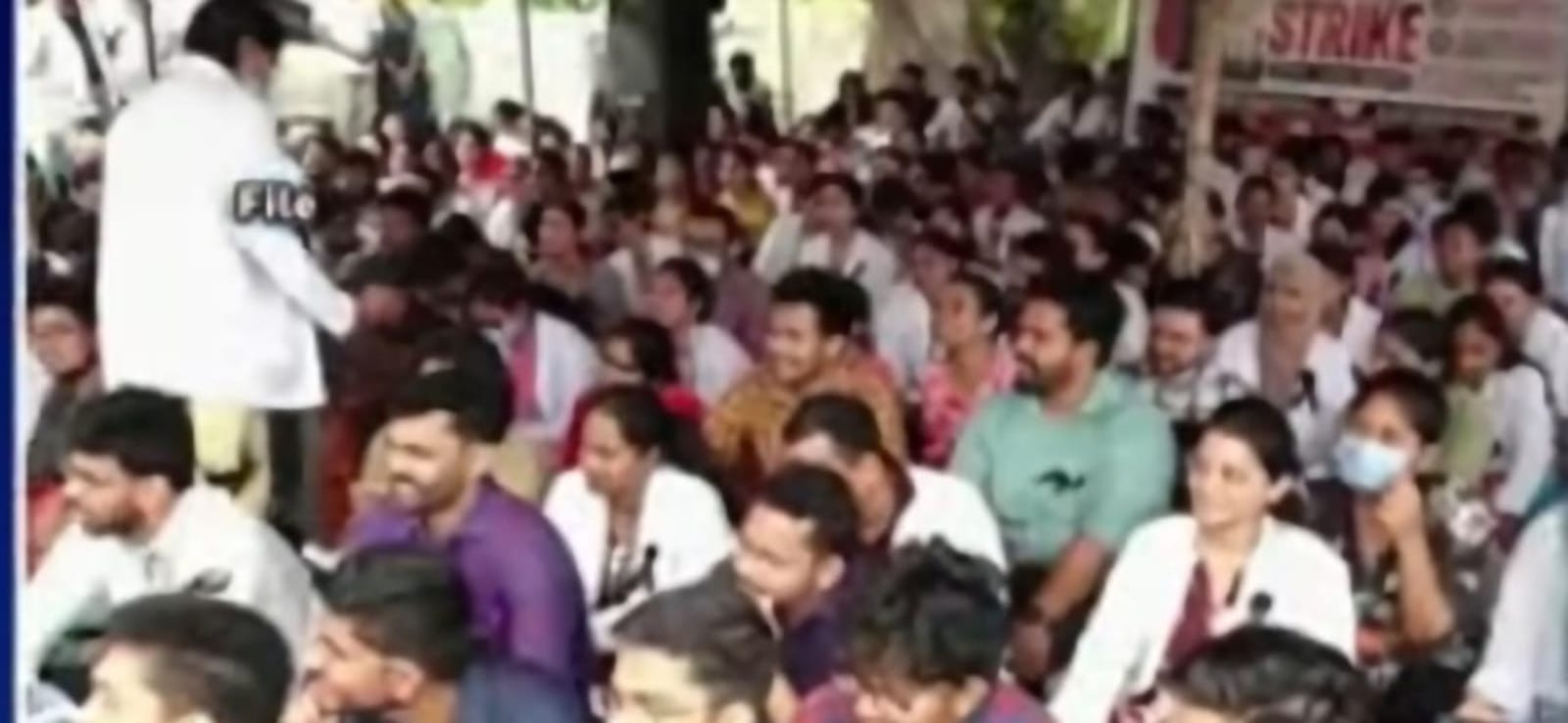
Conditions in the medical and health sector have become a major talking point as junior doctors in Andhra Pradesh have once again taken the path of agitation. With junior doctors going on strike to demand the resolution of their grievances and the implementation of government promises, concerns are being raised that medical services in government hospitals could be affected.
Junior doctors play a crucial role in the public healthcare system. Their services are essential in providing medical care to the large number of patients visiting teaching hospitals and government hospitals every day. They handle many responsibilities such as emergency departments, wards, surgeries, and patient monitoring. If such doctors go on strike, the impact is likely to fall directly on patients.
Medical circles state that the primary demands of the junior doctors include the payment of salaries and stipends, settlement of arrears, workplace safety, improvement of facilities, accommodation, and changes in working conditions. Junior doctors point out that they were forced to resort to agitation as the government did not respond adequately despite their issues being brought to its attention multiple times.
Junior doctors, who pursue medical education while performing duties in hospitals, shoulder a heavy workload. They have to work day and night to serve patients in emergencies. They note that situations sometimes arise where they have to work continuously for long hours. Under such circumstances, it is essential to provide adequate facilities, security, and rest options to the working doctors.
Another critical issue is doctor safety. With the rising number of patients in government hospitals, pressure on doctors and medical staff is also increasing. Junior doctors are requesting tighter security measures in hospitals to prevent tensions between doctors and patients' relatives when unexpected developments occur during treatment.
In light of the junior doctors' strike, patient welfare has become a paramount issue. Most of those relying on government hospitals belong to poor and middle-class families. People who lack the financial capacity to afford treatment in private hospitals depend entirely on government facilities. Therefore, the government bears the responsibility of making alternative arrangements to ensure that patient care is not disrupted.
At the same time, the government should positively examine the legitimate demands of the junior doctors. It is necessary for the government to immediately call for talks to resolve the issues through dialogue. The strike should not be viewed merely as a disciplinary problem, but the real issues behind it must be understood. Doctor associations should also keep public inconvenience in mind and take steps to ensure that emergency medical services face no interruption. Treating patients in emergency situations is the primary duty of the medical profession. Therefore, while talks and protests continue, safeguarding emergency services is extremely important.
The public hopes that negotiations between the government and junior doctors will bear fruit soon. Delaying the issue could escalate the severity of the strike, impacting not only government medical services but also medical students' academic schedules, examinations, and training.
Everyone working in the medical field deserves a dignified work environment. If doctors are provided with proper pay, security, and necessary facilities, they can serve with greater enthusiasm. At the same time, the government must strengthen the system to ensure continuous medical services for the public.
Formulating a permanent policy to resolve the issues of junior doctors is essential. Decisions on stipends, arrears, facilities, and safety should be made with a clear timeline. The government must take proactive measures so that recurrent strikes and protests are not required for every single issue resolution.
Under current circumstances, it is best for both parties to avoid stubborn stances and find a solution through mutual dialogue. If the government takes a step forward, junior doctors are also likely to respond keeping public interest in mind. In the medical sector, coordination rather than conflict benefits the people.
Ultimately, whether it is the issue of junior doctors or patients, the goal is singular—better medical services. Conditions must exist for doctors to work with dignity, and patients must receive quality treatment. Balancing these two objectives is the real challenge before the government.
The government must immediately hold talks on the junior doctors' demands and show a resolution. Taking a balanced decision that protects the legitimate rights of doctors without disrupting patient care is now an urgent necessity.