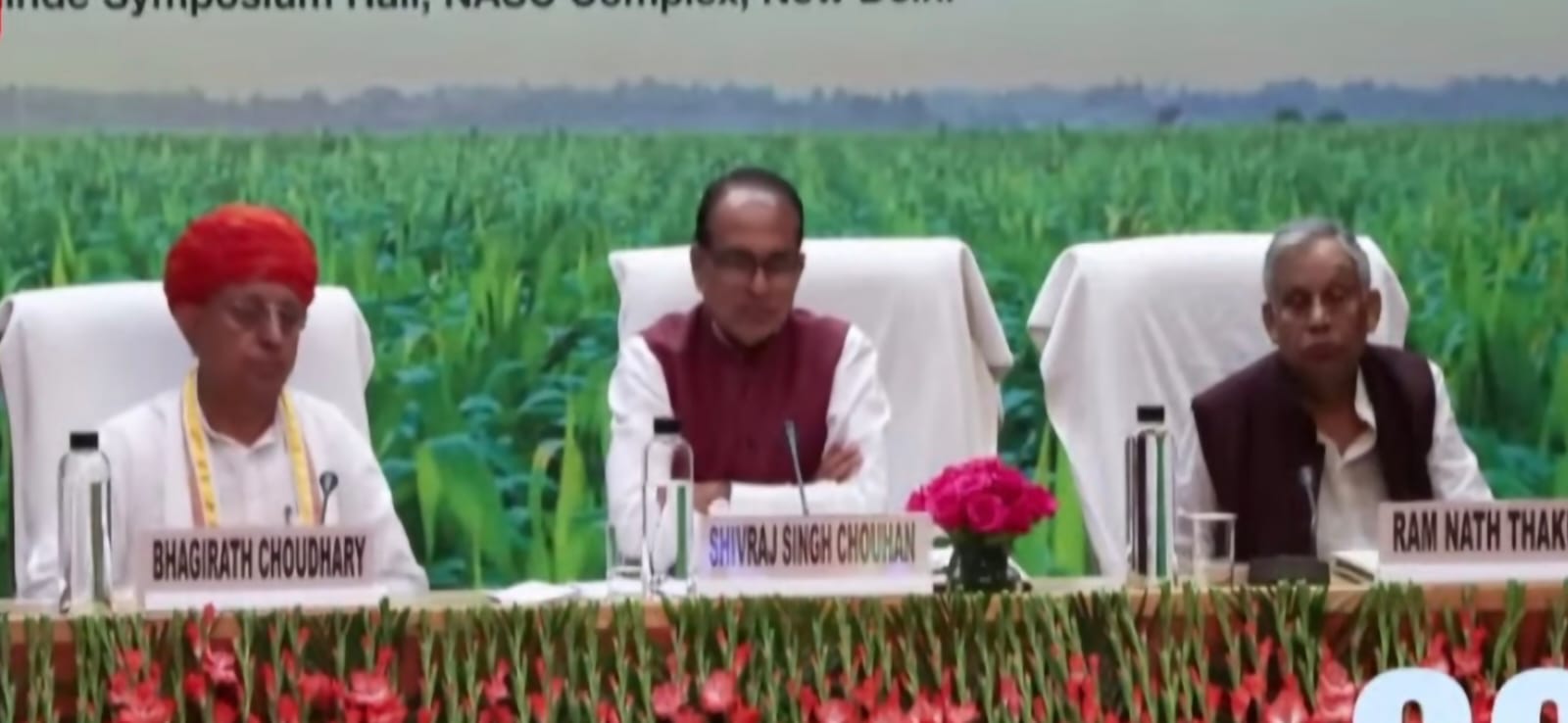
Trinet News, August 26, 2026: India is primarily an agricultural country, with agriculture serving as the backbone of the national economy. Millions of farmers directly or indirectly depend on the agricultural sector for their livelihood. However, the Union Agriculture Minister noted that with changing times, there is an urgent need to extensively adopt modern technology in agriculture. He opined that integrating Artificial Intelligence (AI) into the agricultural sector would particularly benefit farmers.
Farmers are facing severe hardships due to erratic climate changes, new types of crop pests, rising cultivation costs, water scarcity, and fluctuating market prices. In this scenario, AI-based technology can provide farmers with the right information at the right time, the Union Minister stated. AI can analyze weather conditions in advance and issue alerts to farmers. By examining factors such as rainfall, temperature, and wind speed, it can offer useful suggestions on which crop to sow, when to sow it, and how much water is required. This would help mitigate losses caused by natural calamities to some extent.
Artificial Intelligence can also play a crucial role in identifying crop pests and diseases. If farmers upload photos of their crops into a specialized tech system, the problem can be identified and necessary remedies suggested. This allows for early detection of disease severity and protects the crops. AI is also immensely useful in water management. It can estimate the exact water requirement for each crop and advise farmers on when to irrigate, aiding in groundwater conservation. AI contributes to micro-irrigation and tech-driven water management, especially in water-scarce regions.
Furthermore, AI can guide farmers in soil testing, crop selection, and fertilizer usage. By analyzing soil characteristics, nutrient content, and weather conditions, it can recommend the appropriate type of fertilizers for specific crops. This reduces the unnecessary use of fertilizers and pesticides, thereby lowering cultivation costs while also benefiting environmental protection.
AI technology can also be utilized in the marketing of agricultural produce. By predicting market demand, price trends, and future requirements for various crops, advance information can be provided to farmers. This enables farmers to know which crops are in high demand and plan their cultivation accordingly.
However, for AI technology to truly reach farmers, digital infrastructure in rural areas needs to be further strengthened. Technical information should be provided in a language easily understood by farmers. Farmers must be trained in smartphone usage and digital services. Agricultural universities, research institutions, and government departments must collaborate to develop farmer-friendly AI systems. Governments must take special measures to ensure that small and marginal farmers also reap the benefits of this technological revolution. AI services should not be limited to large farmers and corporate entities alone, but must reach every farmer.
True progress in the agricultural sector is possible only when farmers' experience is combined with modern technology. Future Indian agriculture needs to coordinate traditional knowledge with modern technical expertise. Integrating AI into agriculture makes it possible to achieve higher yields at lower costs, reduce crop losses, and increase farmers' income. The suggestions made by the Union Agriculture Minister are poised to guide the future of India's agricultural sector. Just as a farmer holds a plough, in today's modern era, he should also hold technology in his hands. It can be hoped that adding AI to agriculture will pave the way for greater security, higher yields, and better incomes for the Indian farmer.