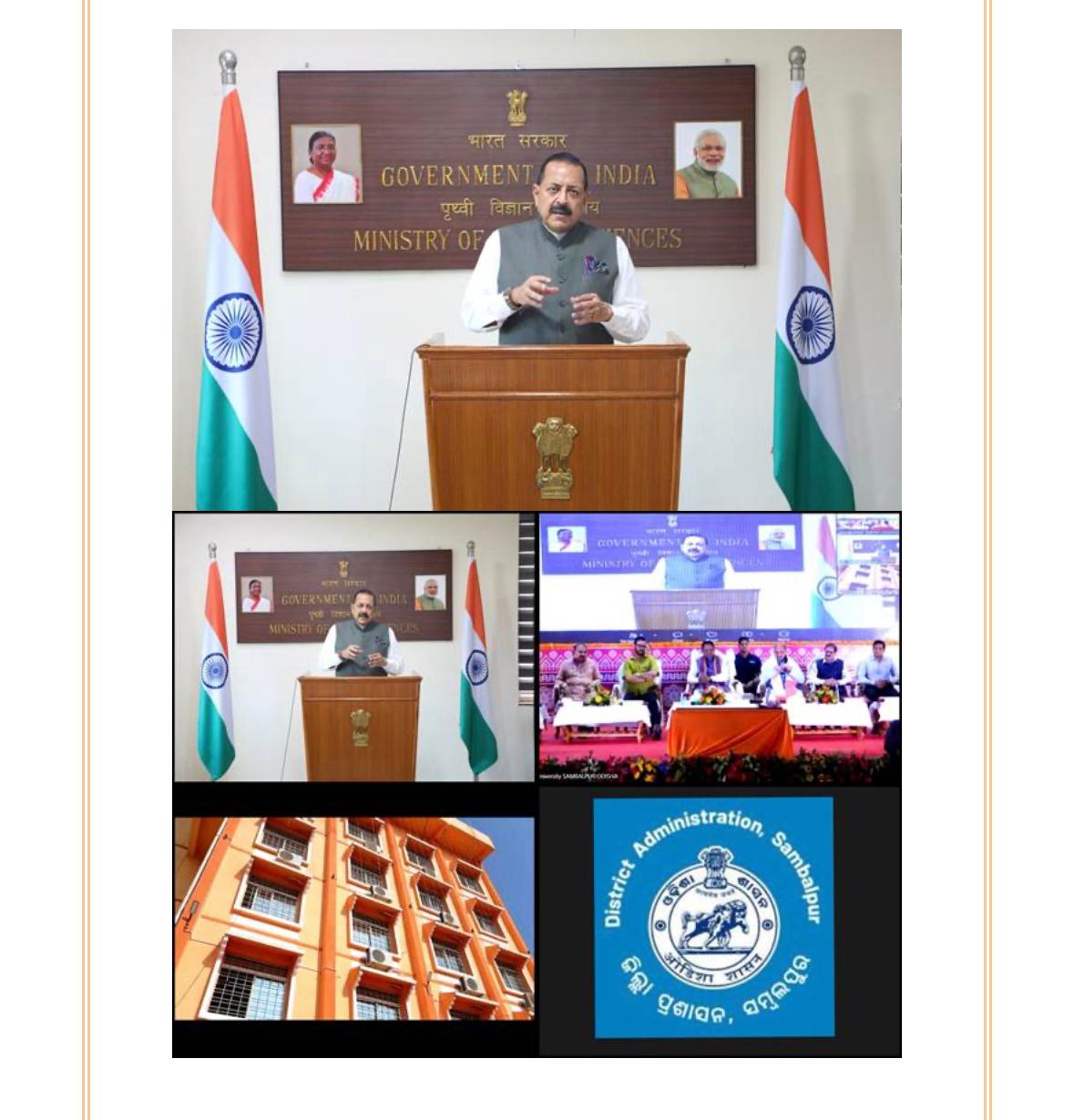
Weather preparedness gets stronger with Mission Mausam: Radars increased from 14 in 2014 to 51 now, with plans to set up 40 more.
New Delhi, Trinet News, September 17: Union Minister of State for Earth Sciences Dr. Jitendra Singh virtually inaugurated India's 51st advanced Doppler Weather Radar in Sambalpur, Odisha. Odisha Chief Minister Mohan Charan Majhi participated in the event.
The Minister stated that this radar installed in Sambalpur will enable more efficient monitoring of weather conditions in western Odisha, southern Jharkhand, northern Chhattisgarh, parts of northern Andhra Pradesh, and surrounding areas of West Bengal.
Dr. Jitendra Singh revealed that while there were only 14 Doppler weather radars across the country in 2014, their number has now reached 51. He stated that the central government has planned to set up 40 more radars as part of 'Mission Mausam', bringing the total number to around 81.
He said these radars will play a crucial role in early identification of severe weather conditions such as thunderstorms, lightning, heavy rains, and cyclones, and in providing timely warnings to the public. The Minister added that automatic weather stations, rain gauges, radiosonde stations, and microwave radiometers are also being widely established to provide more accurate weather forecasts at the local level.
He announced that more Doppler weather radars will be set up in Balasore, Puri, and Bhubaneswar in Odisha. He also mentioned that weather monitoring systems are being further strengthened in Ranchi, Kolkata, Jagdalpur, and Patna.
Dr. Jitendra Singh revealed that in the spirit of 'Neighbour First' and 'Viswa Bandhu Bharat', the India Meteorological Department is providing weather information, cyclone and flash flood forecasts, and early warning services to 13 neighboring countries. He appreciated the Odisha government for its cooperation in setting up the Sambalpur radar. He stated that by integrating modern science and technology with disaster management experience, Odisha can be transformed into a more "weather-ready, climate-resilient state".