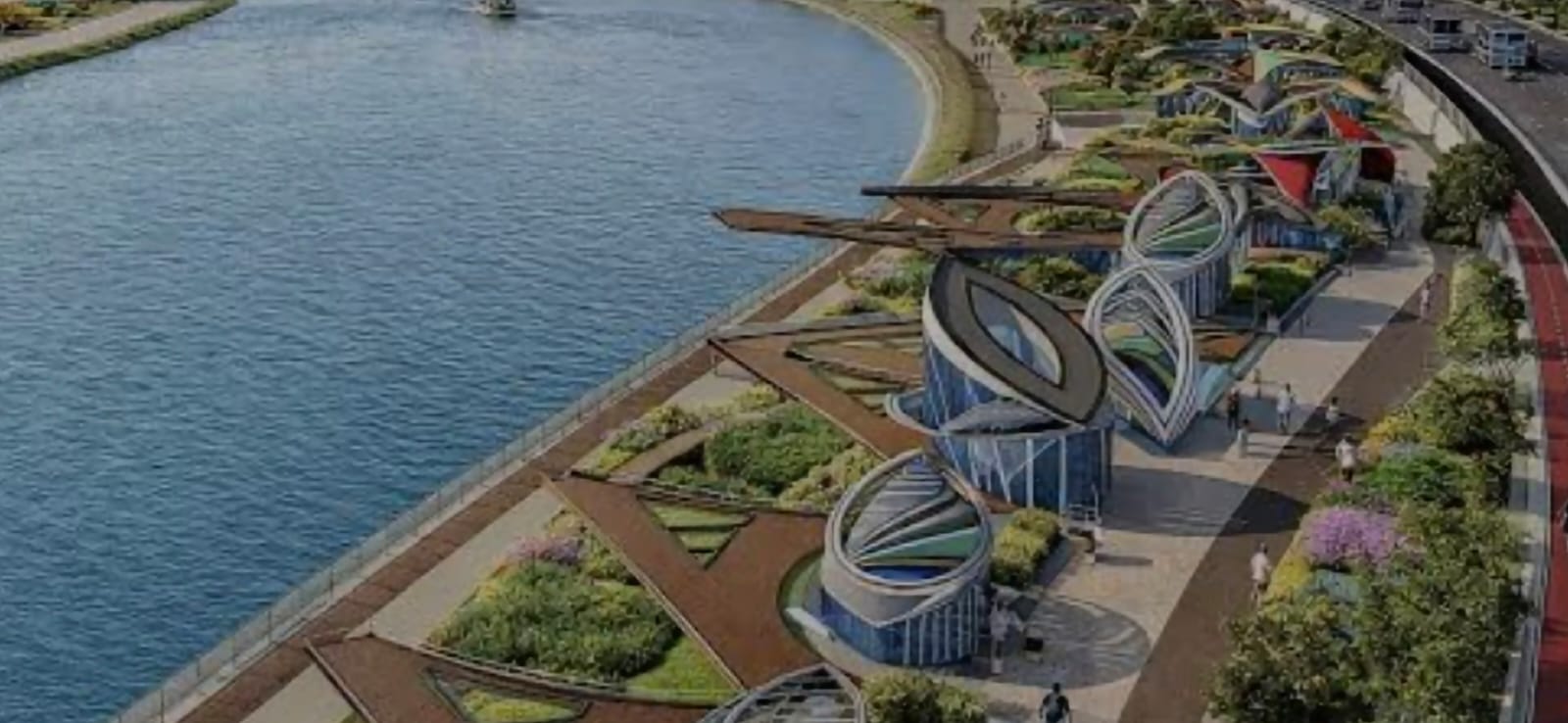
Trinet News, 25 August 2026, Hyderabad: Telangana Chief Minister A. Revanth Reddy has once again reviewed the Musi River rejuvenation project, which is crucial for the development of Hyderabad city. It is reported that the CM has instructed officials to submit a comprehensive report on issues related to Musi River cleanup, basin development, land acquisition, victim rehabilitation, and lands coming under the Full Tank Level (FTL) and buffer zone limits.
The Musi River development project is not just a program to beautify the river, but is tied to several aspects keeping Hyderabad's future needs in mind, such as flood control, sewage treatment, environmental protection, and creating a pleasant environment for the public. The Chief Minister had previously stated that cleaning up the Musi River is one of his primary goals.
Clarity Needed on FTL and Buffer Zone: The issue of FTL and buffer zone lands is emerging as the most sensitive aspect of the Musi project. There are many doubts among the public regarding which lands fall within the river limits, which lands are in the buffer zone, which lands need to be acquired exclusively for project requirements, and what the situation is in areas where houses are already built. In this backdrop, the government intends to clearly identify the land status for every survey number and provide information to the public based on official records. There is a need to take measures to prevent anxiety among property owners and residents due to a lack of clarity regarding FTL and buffer zone boundaries. According to the Telangana government, alongside the Musi, there is a need to identify and protect the FTL and buffer zones of lakes and nalas (drains) in the city. Previously too, the CM had directed officials to clearly identify the boundaries of water bodies and submit a report.
Justice for Landowners: The government has already stated on several occasions that landowners will be done justice in areas where lands are required for the Musi development project. Previous reviews revealed that alternatives such as cash compensation or Transferable Development Rights (TDR) are being considered for land acquisition. To dispel fears among the public that they might lose their homes and lands in the name of the project, the government needs to act transparently. Aspects such as rehabilitation, alternative housing, and adequate compensation for eligible affected families must be clearly explained.
Priority for Rehabilitation of the Poor: There are families who have been living in the Musi river basin for many years. Among them, a large number are poor and middle-class families. The government had previously directed officials to undertake rehabilitation measures without disrupting their livelihoods if residences have to be removed due to the project. In past reviews, the CM focused on providing double-bedroom houses or alternative rehabilitation to eligible poor people living in the Musi river basin.
Broad Objectives of the Project: The project includes several components such as cleaning the Musi River, preventing sewage from entering the river, reducing flood risk, developing the riverfront, and providing parks, walking tracks, and recreational facilities for the public. The government aims to give Hyderabad a new look through the rejuvenation of the Musi River. It intends to protect the river basin environmentally while developing the necessary infrastructure for the city.
Full Information Must Be Given to the Public: The primary demand from the public regarding the Musi project is singular—official clarity must be given on which land is located where. If the FTL limits, buffer zone limits, land acquired for project needs, government land, private land, and other aspects are announced survey-number-wise, it will clear many misconceptions. Transparency will increase by making clear maps and official records of the lands available to the public.
Development Along with Public Interests: For the Musi project to succeed, the government must prioritize river cleanup, environmental protection, and flood control on one hand, while equally considering people's assets, livelihoods, and rehabilitation on the other. Public aspiration is that the project should bring long-term benefits to Hyderabad while ensuring that people who have lived in the Musi basin for generations are not wronged.
If the Musi project is taken forward by coordinating four aspects—full-fledged official clarity on FTL and buffer zone lands, transparent land survey, fair compensation and rehabilitation for victims, and environmental protection—it has the potential to stand as a milestone for Hyderabad's development.