Tri Net News – Editorial: By Peri Nageswara Rao. A human life is fraught with questions. What is right? What is wrong? How should one respond during hardships? How to act in victory? How to stand tall in defeat? How to behave with fellow human beings? How to fulfill responsibilities? Seeking answers to such questions, people read many texts. However, transcending thousands of years, the Bhagavad Gita remains a monumental scripture that continues to guide human life to this day.
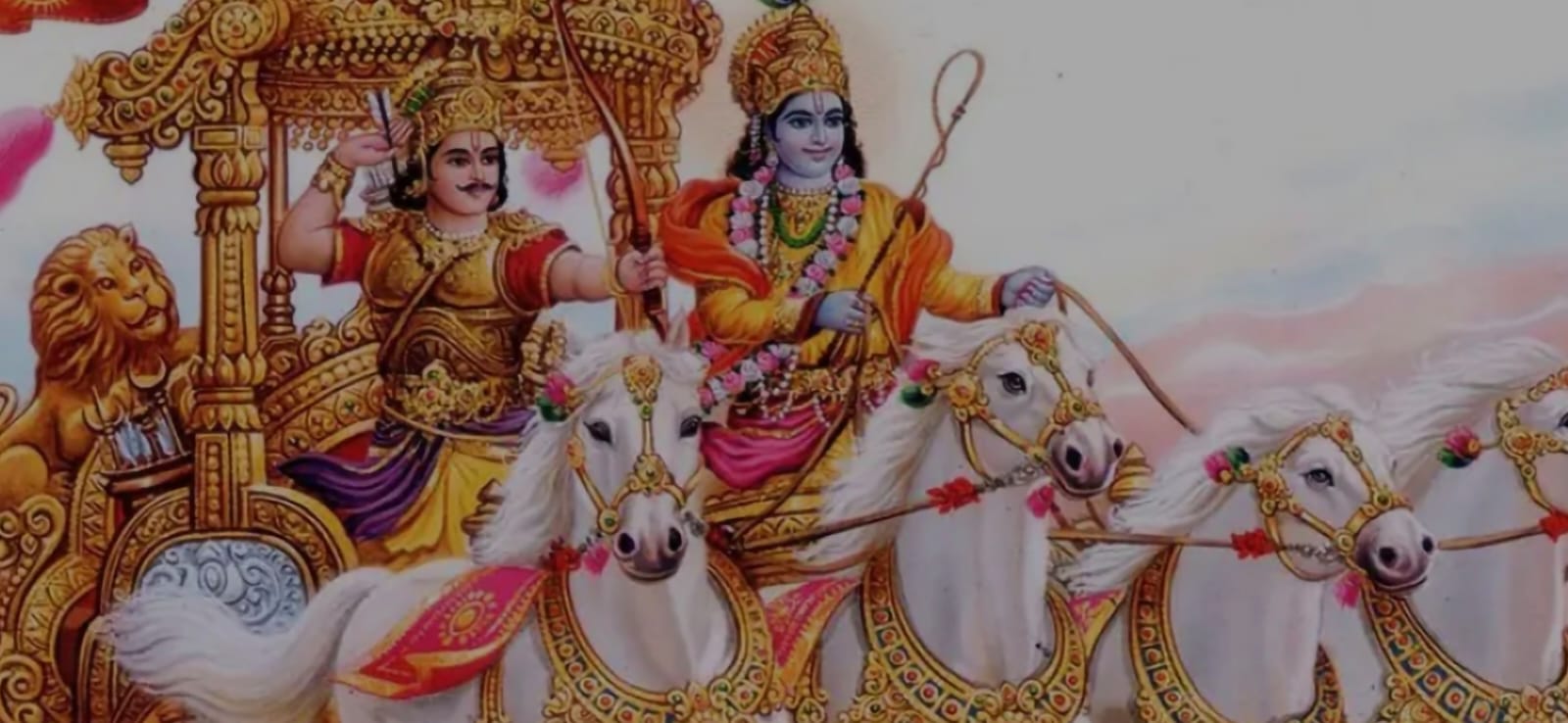
Many view the Bhagavad Gita solely as the teachings imparted by Sri Krishna to Arjuna during the Kurukshetra war. But to limit the Gita to that perspective alone is to restrict its expansive philosophy. Kurukshetra was merely a context. In fact, Kurukshetra can also be understood as a symbol of the inner conflict every person experiences daily. Every day within us, a battle wages between good and bad, righteousness and unrighteousness, hope and despair, desire and duty. How should a person make decisions in that struggle? How to fulfill one's duty? How to control the mind? The Bhagavad Gita explains these very aspects.
Kurukshetra is a context... Life is the real message. Reading the Gita does not mean setting aside the historical context of the Kurukshetra war; rather, one must understand that the message of the Gita is not confined to the battlefield alone. The dilemma faced by Arjuna is also confronted by modern man. Making a decision at work, resolving a family issue, fulfilling a societal responsibility, standing up against injustice, overcoming financial troubles—in every context, man stands in his own kind of Kurukshetra. That is why the teachings of the Gita remain relevant today.
Duty is man's dharma. One of the most important messages the Gita teaches us is the concept of duty. A person must honestly fulfill the responsibilities entrusted to them. Without excessive anxiety over the outcome, one should put forth their best effort. This is not merely about a job or profession. We carry numerous responsibilities as parents, children, life partners, friends, citizens, and members of society. Fulfilling them honestly is an essential part of the way of life. The outcome may not be in our hands, but effort certainly is. Therefore, our effort must be honest.
,The Gita as a mirror to our behavior. How should a person's behavior be in society? Values such as respecting others, keeping anger under control, staying away from ego, abandoning jealousy, and speaking thoughtfully are extremely necessary for today's society. No matter how educated a person is, how much they earn, or how high a position they attain, if their behavior lacks humanity, that success has no meaning.
The Bhagavad Gita first advises man to know himself. He must recognize his weaknesses, control his mind, and fulfill his responsibility without harboring hatred towards others.
A pathway to solving problems. Problems are inevitable in life; there is no life without problems. But what matters is how we respond when a problem arises. When facing hardships, it is easy to panic, despair, and blame others. However, calmly analyzing the problem and seeking a solution is wisdom. Arjuna, too, was distressed at one point with the feeling that he could not perform his duty. Sri Krishna transformed his thoughts and guided him on aspects such as righteousness, duty, self-confidence, and knowledge. This is the greatness of the Gita: it does not solve our problem for us; rather, it transforms our mindset to face the problem.
Past, present, and future. In a person's life, there are always thoughts about past events, ongoing developments in the present, and what the future holds. We cannot change the past, but we can learn lessons from it. We can shape the present as best as we can, and make the right decisions today to improve the future. This is why the Bhagavad Gita cannot be viewed as a text belonging to just one era. As long as permanent problems in human life exist, the message of the Gita will hold significance.
The mind is a friend... The mind is an enemy. The mind is both a person's greatest strength and greatest weakness. If the mind can be kept under control, it becomes our friend. If the mind controls us, it becomes our problem. Emotions such as anger, fear, jealousy, greed, and ego influence our decisions. Therefore, keeping the mind calm is essential. This teaching is even more vital in today's fast-paced life. Technology has grown, opportunities have increased, and wealth has multiplied, but peace of mind is slipping away from many. At such times, the Gita reminds man of inner balance.
Why does today's society need the Gita? Today, divisions in families, intolerance in society, mutual criticisms in politics, and stress in personal lives are growing. Everyone tends to think their own word is the only correct one. In such times, it is necessary to respect others' opinions, act responsibly, stand up for justice, and think of societal interests ahead of personal gains.
The Bhagavad Gita does not tell man to run away or escape from problems. It teaches him to face problems bravely and honestly perform his duty.
Not just reading the Gita... it must be practiced. Reading the verses of the Gita is great. Knowing their meaning is even greater. But putting those teachings into practice in our lives is the greatest of all. If there is honesty in our words, commitment in our work, humanity in our behavior, and righteousness in our decisions—that is truly practicing the message of the Gita.
The Bhagavad Gita should not be seen merely as a text kept in the prayer room, but as a guide for every step in life. Kurukshetra may be a battlefield, but every person's life is also a Kurukshetra. Every day we make numerous decisions, face numerous problems, maintain numerous relationships, and fulfill numerous responsibilities. Therefore, the Gita should be viewed not just as a teaching delivered in the context of war, but as a guide for man's lifestyle, thinking process, behavior, duty execution, and problem-solving.
Learning lessons from past events, facing present conditions bravely, and making right decisions to shape a better future—in this journey of life, the Gita provides man with self-confidence, intellectual strength, and a righteous perspective on life. The Bhagavad Gita is not a book about war; it is a book about man. It is a book about life, serving as a ultimate guide on how a human being should live.