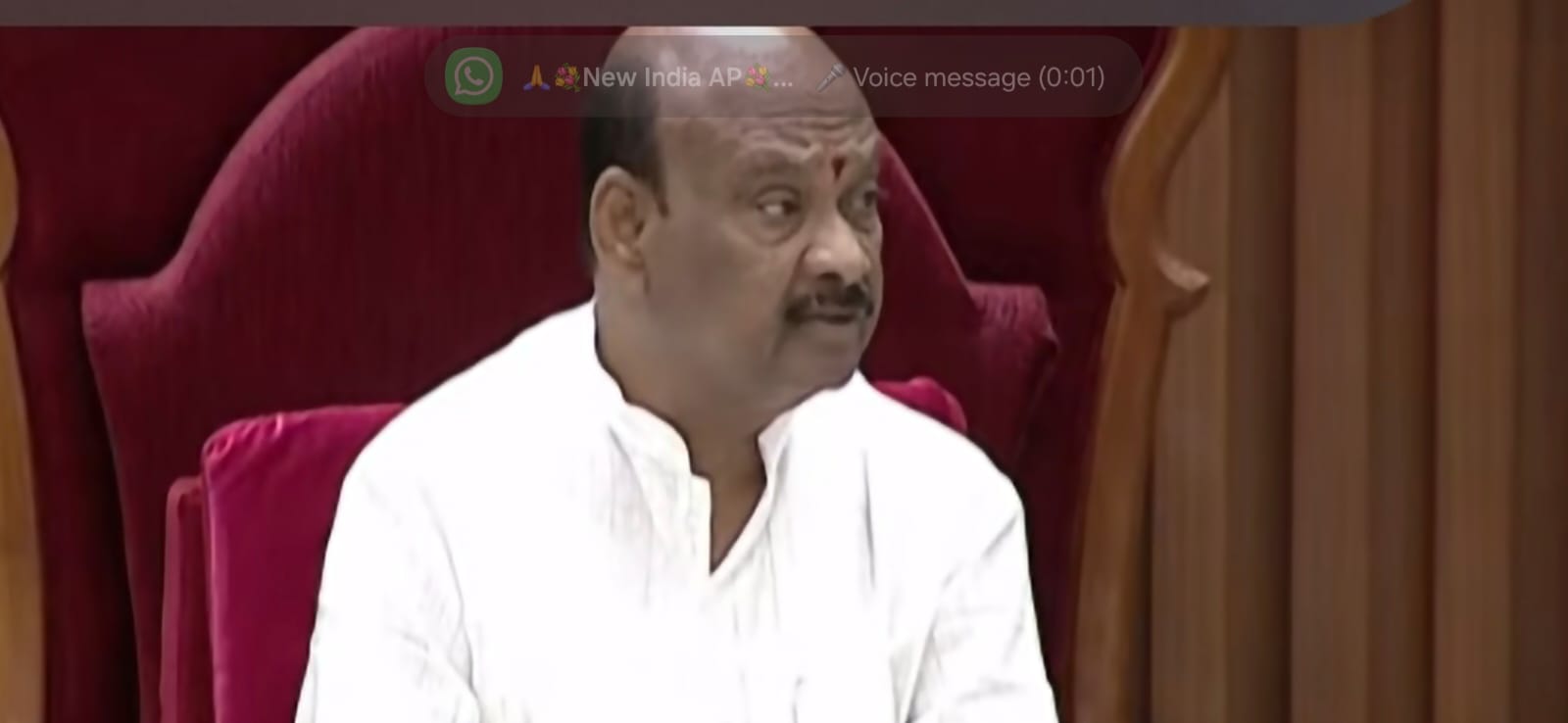
{"titleEn":"Four-Day AP Assembly Session Concludes with Unanimous Approval of 12 Bills and Over 25 Hours of Proceedings","excerptEn":"The four-day monsoon session of the Andhra Pradesh Legislative Assembly concluded on Thursday after more than 25 hours of proceedings, with the House unanimously passing 12 bills.","bodyEn":"Trinet News | August 21, 2026: The four-day monsoon session of the Andhra Pradesh Legislative Assembly concluded on Thursday, with Speaker Chintakayala Ayyanna Patrudu adjourning the House indefinitely. Over the course of four days, the legislative proceedings lasted for a total of 25 hours and 15 minutes. During this period, the government held discussions on several key issues, unanimously approved 12 bills, and withdrew one bill.
A major highlight of the session was the unanimous passage of 12 bills, which will pave the way for crucial reforms in sectors such as education, skill development, private universities, and local body elections. Notably, four key bills concerning the higher education sector received the approval of the House. These include the establishment of private universities, the creation of skill universities, changes to the higher education regulatory framework, and matters related to teacher recruitment.
Giving a New Direction to Education
The House approved bills introduced by the government aimed at further strengthening higher education in the state and providing youth with skills suited for employment opportunities. The Assembly passed the bill for the establishment of state private skill universities, alongside amendments related to the establishment and regulation of private universities in Andhra Pradesh. The government's intent is to open up opportunities for domestic and international investments in the education sector by modifying regulations regarding the establishment of private universities. Additionally, a bill concerning the recruitment of teachers in state educational institutions was approved, which will provide a legal pathway for filling 1,523 university faculty posts in the first phase.
Direct Elections for Mayors and Municipal Chairpersons
The session also served as a platform for a key reform in local body governance, with the Assembly passing the Fourth Amendment Bill to the Andhra Pradesh Municipal Laws. Through this amendment, the government has taken steps to reintroduce the system where mayors of municipal corporations, chairpersons of municipalities, and presidents of nagar panchayats are directly elected by the people. While a direct election system was previously in place in the state, it was later replaced by indirect elections. The government has now moved to restore the direct election system. The administration believes that allowing people to directly elect their urban civic leaders will enhance public participation in governance and increase direct accountability to the citizens.
Emphasis on Question Hour
During the four-day session, members brought various public issues to the government's attention. Ministers answered a total of 40 starred questions, while replies to another 25 starred questions and one unstarred question were laid on the table of the House. Members asked questions regarding public grievances, the implementation of government schemes, development programs, and administrative matters. During the Question Hour, ministers provided details concerning their respective departments to the House.
Three Short-Duration Discussions
Three short-duration discussions were also held in the House, during which members expressed their views on various matters of public importance. Chief Minister N. Nara Chandrababu Naidu and a minister made statements on different issues under Rule 344. Proceedings on the final day featured a special two-hour Zero Hour, which was extended to give more members an opportunity to raise issues concerning their respective constituencies. This was followed by the Question Hour and a short-duration discussion on the 'Super Six' welfare agenda.
Approval of Water Pollution Control Act
On the final day of the session, the Legislative Assembly passed a unanimous resolution to implement the central amending legislation relating to water pollution control in the state. This decision holds significance given concerns surrounding water resource conservation, pollution control, and environmental protection. With increasing urbanization and industrial activities in the state, protecting water resources has become even more critical, and legal measures are deemed necessary to ensure clean water sources for future generations.
Broad Participation of Members
A total of 103 MLAs participated in discussions on various subjects across the four-day session. The Speaker announced the party-wise strength in the House: 135 members for the Telugu Desam Party, 21 for the Jana Sena Party, 11 for the Yuvajana Sramika Rythu Congress Party, and 8 for the Bharatiya Janata Party. Despite political differences between parties, the unanimous approval of several bills stood out as a special feature of the session, reflecting a consensus that all parties need to work together on matters of public interest.
Discussion on Farmers and Welfare
The proceedings also touched upon subjects like farmers, welfare schemes, and development programs. The government advised farmers to enroll in the crop insurance scheme. Members discussed the effective implementation of welfare schemes and ensuring benefits reach eligible beneficiaries. Reviewing whether the government's welfare and development initiatives are effectively reaching the public is considered a vital aspect of a democratic system.
Conclusion of the Session and Responsibilities Ahead
The four-day assembly session has concluded. Key highlights included 12 bills receiving unanimous approval, three short-duration discussions, and the raising of public issues during Question Hour over the course of 25 hours and 15 minutes of proceedings. The government withdrew one bill, the House unanimously approved one government resolution, and a committee report was also submitted and adopted.
The responsibility now lies with the government to ensure that the bills passed by the Assembly go beyond mere legal changes and are implemented in a manner that directly impacts people's lives. In particular, the practical outcomes of decisions made in education, skill development, local governance, and environmental protection will become evident in the future. Overall, the four-day Andhra Pradesh Legislative Assembly session completed substantial legislative business in a short span, concluding with discussions on public issues, the passage of new laws, and a review of government policies."}