Expert recommendation to expand the use of artificial intelligence in line with local needs
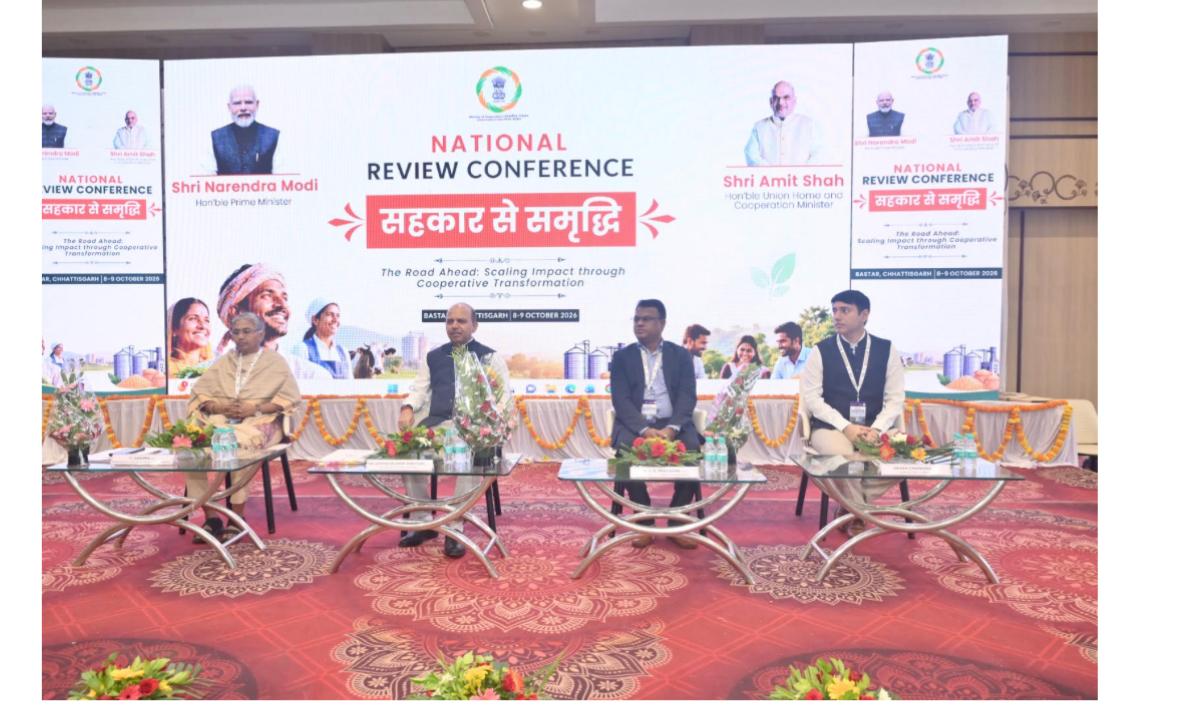
New Delhi, 8 October 2018 Trinet News: Minister of Electronics, Information Technology, Railways and Telecommunications Ashwini Vaishnav has said that the objective of Government is to make technology accessible for all so that Artificial Intelligence (AI) benefits reach common citizens, businesses and various systems. He also unveiled the World Bank Group's 2026 Global Development Report: Opportunities for Artificial Intelligence at The Oberay Hotel, New Delhi on Thursday.
Policy makers, development professionals and representatives of the technology sector participated in a joint initiative organised by IndiaAI Mission, Ministry of Electronics, Information Technology, Union Ministry and World Bank Group. The report proposed a three-stage approach for developing countries to adopt AI, adapt it to local needs and further develop it.
Better results in agriculture and medicine
He said that AI is already making a difference in people's lives. He said the AI-based farming practices of Baramati have increased yields by 40 per cent, water and fertilizer consumption has decreased by 30 per cent. Farmers who do not use computers are also benefiting from voice services on phones.
The Minister said that TB detection in the medical sector has increased by 35 per cent. He said that 5 lakh farmers in Gujarat are using Agristak and AI services related to animal health through Sarlaben 6 have benefited 3 crore cattle and their owners.
IndiaAI Mission with seven points.
The Government is focusing on seven areas under the IndiaAI Mission to build an integrated AI system in the country: computing capability, development of domestic basic models, development for AICOSh dataset platform, application development, future skills, financing for startups and secure and reliable AI.
The mission aims to develop AI solutions in line with Indian languages, local issues and social diversity. Government is promoting domestic tools in areas such as reducing bias in AI, checking algorithms, interpretation systems for decisions, privacy of personal information, deepfake identification.
The World Bank's report said that AI can increase the availability of professional services to more people, improve productivity and public services. This requires reliable power, internet connectivity, computing infrastructure, quality data, skills and competent enterprises.
From experiments to extensive implementation
Experts suggested that successful AI experiments in India should be evaluated on the basis of results and widely implemented. World Bank spokesman Dr Somik Lal said it is crucial not only to create AI but also to use it for people's needs.
Dr. Michael Kramer, Chief Economist and Senior Vice President of World Bank said that the AI progress in India is providing useful lessons for other developing countries. He cited as examples climate forecasts to farmers and educational technological solutions in Andhra Pradesh.
Dr. Gaurav Nayyar, Director of the report, suggested that priority should be given to adapting AI tools to local conditions and said that instead of having to spend a lot on building state-of-the-art systems from scratch, available tools should be used accordingly.
The Ministry Secretary, S. Krishnan said that development of human skills is very important and worked on AI Talent Mission 2 in line with the Prime Minister's vision, he said there was a need to further expand AI use in domestic enterprises.
Exhibition of state AI innovations
The new consciousness of Andhra Pradesh has been a highlight in the State AI Exhibition, which aims at early detection of developmental delays among children from zero to six years old, said M. VenuGopal Reddy, Director, State Department of Women Development and Child Welfare.
The Maharashtra Farmers Personal Advice Platform, Mahavisthar AI, Education Administration Solutions of Meghalaya ADSC Grid and UTI used for cervical cancer screening were also presented.
The experts who participated in the high-level discussion agreed that there is a need to develop policies to ensure that AI benefits reach all sections, build public confidence and control risks.